10 - Open Questions and the Edges of Reality
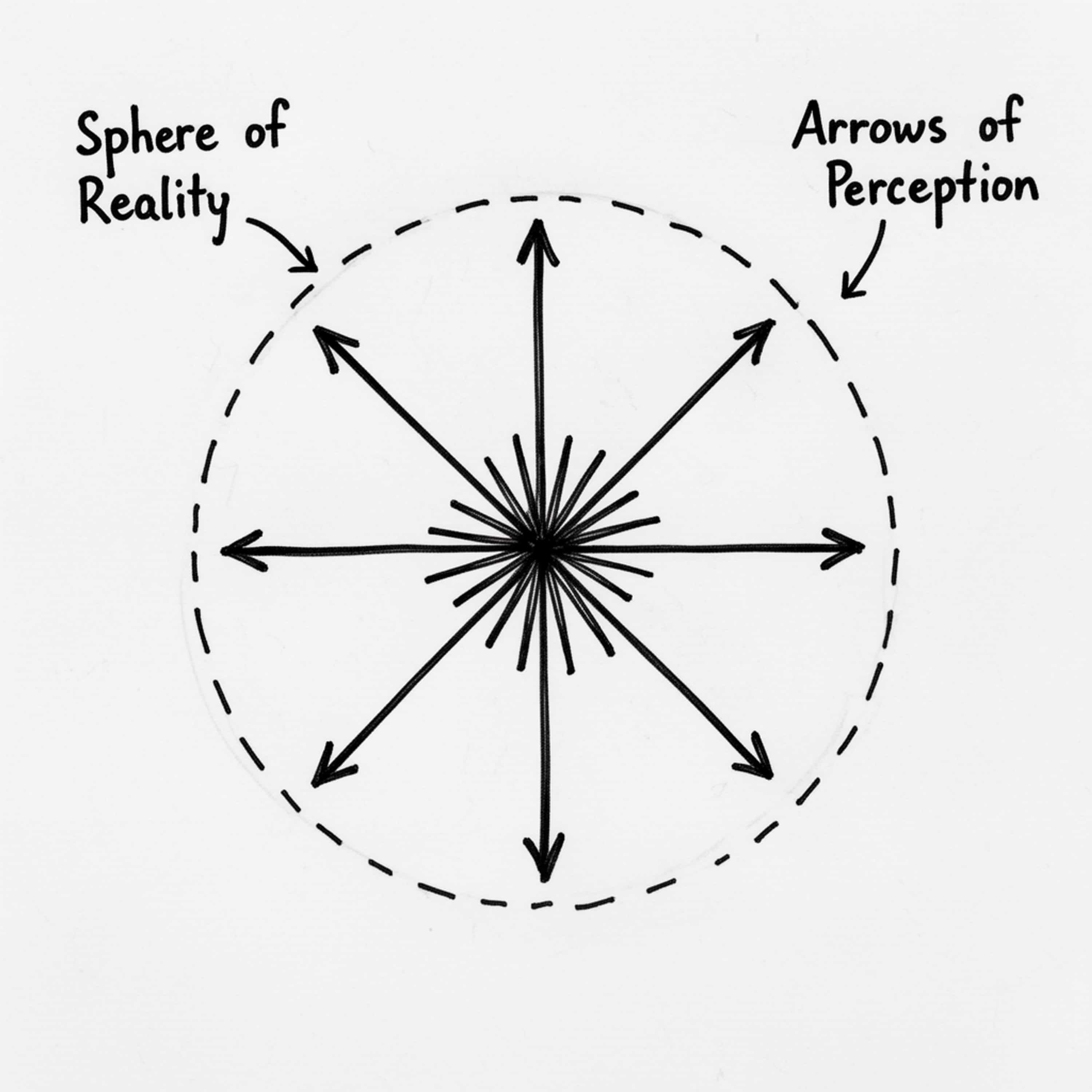
In this episode, Dr. Toye Oyelese explores the unresolved questions at the heart of the Sphere of Reality framework. He addresses the enduring mysteries of consciousness, the challenge of alignment between subjective worlds, and the practical significance of recognizing the boundaries of one’s own reality.
This show was created with Jellypod, the AI Podcast Studio. Create your own podcast with Jellypod today.
Get StartedIs this your podcast and want to remove this banner? Click here.
Chapter 1
The Challenge of Alignment
Toye Oyelese
Welcome back to The Sphere of Reality. I’m Toye Oyelese, and—well, here we are, final episode of the series. I’ve spent the last nine episodes laying out the framework: the Toye Paradox, the boundaries of awareness, surface area, contact, all of it. And if you’ve stuck with me this far, thank you—seriously. But, I feel like I have to be honest with you at the end: there are open questions. The framework gets us, I think, a long way, but there are things even I don’t know how to resolve.
Toye Oyelese
And, probably the single biggest open question is—well, alignment. So, let me try to explain what I mean. Throughout this series, we’ve been talking about these separate spheres of reality—each of us locked in our own subjective world, ordering what’s just beyond our immediate awareness. That’s great as a model for the self, but it creates a conundrum: if we’re all locked in, how do we coordinate? Like, how do our internal orderings become compatible enough to let us do things together?
Toye Oyelese
I mean, think about this: in medicine, we perform surgery together. Multiple surgeons, nurses, anesthetists—we’re all bringing different worlds, and yet, somehow, we coordinate around this body, in real time, and no one dies. Well…most of the time, anyway. We build bridges that don’t collapse, mostly. We play music together, and the song emerges, not cacophony. There’s something—some process, some mechanism—that lines us up just enough to make these feats possible.
Toye Oyelese
Is it constraints within reality itself that kind of…channel us toward the same orderings? Maybe there’s something about antevalence—about the raw stuff outside awareness—that forces us into converging structures, like how physical laws guide bridge-building, or biology dictates how surgeries go. Or maybe, through repeated contact—those little calibrations we talked about in earlier episodes—our spheres kind of tune into each other over time, checking for resonance, shifting, and eventually landing in a shared-enough zone. I might be overreaching; honestly, I don’t know. And I think it’s important to admit that. Even after all these episodes, the question of true alignment is still out there, unsolved.
Chapter 2
The Mystery of Consciousness
Toye Oyelese
And while we’re on the subject of open questions, there’s a bigger, almost haunting one—the one that started this whole absurd project of mine. What is consciousness, really? I mean, the Toye Paradox shows why we can’t falsify consciousness, because you can’t step outside your own awareness to measure it. You’re always inside the box, looking around. And that means, by the very structure of our experience, we’re blocked from ever getting that external handle on what consciousness is.
Toye Oyelese
I remember—years ago, when I was doing rural work in Nigeria, fresh out of training, often I’d find myself utterly alone. Sometimes I’d look out at the night sky and feel this mix of awe and…well, isolation, honestly. Because, no matter how many people I spoke to at the clinic, or how many patients I saw, I was always aware of just being at the center of my experience, unable to really step into someone else’s world. It’s something I carried even as I moved around the world—coming to Canada, grappling with cultural shock, learning new systems. You’re always in the center, aren’t you? It’s like, you can share stories, you can open up, but at the end of the day, nobody else can experience the boundaries of your sphere from your perspective.
Toye Oyelese
And here’s the thing. I’ve come to appreciate that this question—what is consciousness—may never be answerable, and not because we’re not smart enough, or we haven’t found the right lab technique. It’s almost…well, inherent in the problem itself. The structure won’t permit an answer from the inside. That doesn’t stop me from wondering, but at some point, you just acknowledge the limit, let it be what it is, and keep moving.
Chapter 3
Working With Edges: Practical Insights
Toye Oyelese
So where does that leave us? If you take nothing else from this whole framework—if most of what I’ve said goes out the window—the piece I want you to hold onto is that you can work with what you can actually observe. We may not answer the question of ultimate alignment or the real nature of consciousness, but we can look right at our own edges. We can notice the boundary—where our awareness cuts off, where things fade into antevalence, where it all gets fuzzy.
Toye Oyelese
What do we do with that? Well, we see expansion and contraction. In my clinic, I’ve watched countless patients face the edge of fear—say, the big scary MRI, or making peace with a diagnosis. Action—sometimes just booking that appointment or having one honest conversation—pushes the edge out. Fear and withdrawal, on the other hand, shrink it. Or, in conversation, I notice my own sphere grow—I mean, really grow—when I listen deeply to a story I don’t understand, and let it shape what I thought my limits were. That’s what genuine contact does. The edge moves, and suddenly, the world is a little bigger.
Toye Oyelese
So I want to leave you with a question—the one I’m still asking myself. If you can’t leave the center of your own sphere, if you can’t step outside the box, but if the edge is moveable—what will you do with that? Not in theory, but in your day-to-day. Where can you nudge the line outward? Through a new conversation, a new risk, a small act of engagement instead of withdrawal. Because, as we’ve seen throughout this series, the dash around your sphere isn’t a wall. It’s an edge. And edges can move—if you let them.
Toye Oyelese
That’s the core insight I want you to take away. I might not have all the answers, and chances are, no one does. But as long as we’re still nudging our own boundaries—still acting, still reaching out, still daring to meet the unfamiliar edge—the journey continues. Thank you for letting me share mine.